

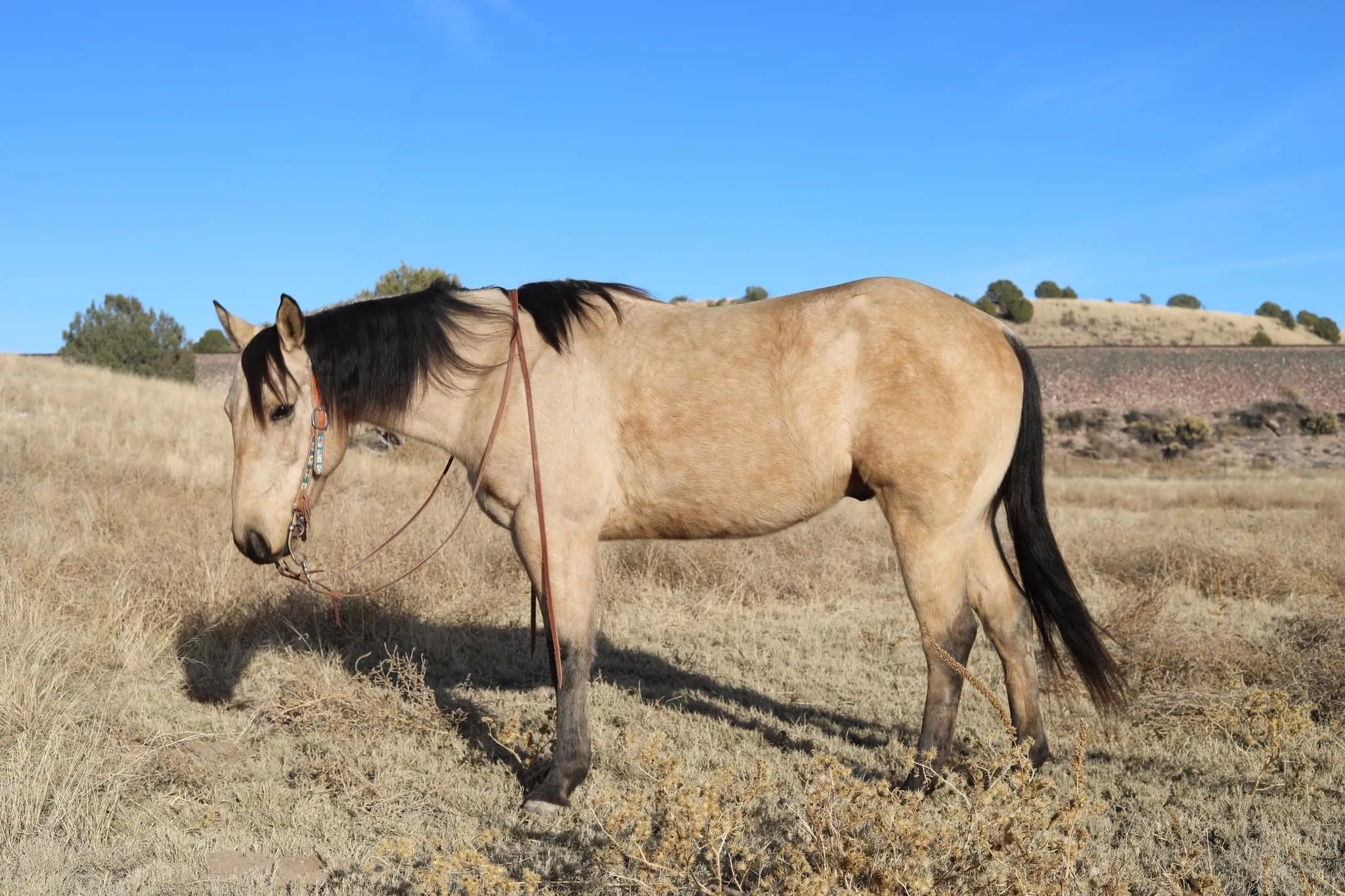
Desensitizing a horse is not about proving that an object is harmless by pushing it closer and closer. It is about giving the horse time to notice something unfamiliar, stay connected to the handler, and discover that it can think its way through the moment. Done well, it builds confidence that carries beyond one tarp, flag, or noisy corner of the arena.
Done poorly, it can turn a reasonable concern into a bigger fight. A horse may freeze, rush away, crowd the handler, or react harder the next time because the lesson felt inescapable. The better approach is patient and specific. Start with a manageable question, watch what the horse is telling you, and let a small thoughtful response be enough to earn relief.
Start by changing the goal
The goal is not for the horse to ignore everything. A horse should notice a new sound, object, or change in the environment. What matters is whether the horse can look without losing balance, stay out of the handler’s space, and come back to a quiet response. Alert is not the same as afraid, and curiosity is more useful than obedience that comes from being overwhelmed.
Choose one plain goal before you begin: let the horse look at a raincoat from ten feet away, walk past a tarp with a relaxed lead, or stand while a saddle pad moves gently nearby. A goal that small gives you a clear answer to reward. It also prevents the session from becoming a test of how much pressure the horse can endure.
The same habits that make groundwork exercises useful apply here. Ask clearly, keep enough room for the horse to make a good choice, and release when the horse tries. You are building a conversation, not winning an argument.
Choose a safe place and a simple object
Begin in an enclosed area with honest footing and enough space to step away without getting trapped against a fence or gate. Use a halter and lead the horse already understands. Gloves and sturdy boots are sensible around any horse, and the lead should never be wrapped around a hand, wrist, or waist. The handler needs room to stay safe if the horse makes a sudden move.
Start with an ordinary object that moves or sounds a little differently than the horse expects: a folded tarp, a jacket, a saddle pad, a soft flag, or a quiet plastic bag tied to the end of a stick. Do not begin with the biggest or noisiest thing available. A horse that learns to process small changes develops a better foundation for the larger surprises that show up around trailers, cattle, ranch work, and trail riding.
Keep the object in your control. A loose tarp flapping in high wind can create more pressure than you can fairly adjust. If the environment is already busy, windy, or distracting, make the lesson easier or wait for a quieter day. Good training starts with a setup that allows both horse and handler to succeed.
Find the horse’s thinking distance
Every horse has a distance where it can see the new object and still process what is happening. At that distance, the horse may raise its head, pause, or look hard, but it can still follow a soft lead, breathe, and keep its feet under itself. That is where the lesson belongs.
If the horse braces backward, swings its hindquarters away, rushes into your space, pulls against the lead, or cannot take one calm step, you are too close or asking too much. Back up until the horse can think again. Increasing pressure at that point rarely creates confidence. It more often teaches the horse that it must escape before the object gets closer.
Give the horse time to look. A quiet pause is work. Do not keep jiggling the object just because the horse is standing still. When the horse lowers its neck, blinks, breathes out, or softly shifts attention back to you, soften your own body and let the object become quiet too. That change tells the horse that calm attention is the answer.
Approach in small, reversible steps
Instead of walking straight at the object until the horse has no choice, approach and retreat. Take one or two calm steps toward it, then step away before the horse feels trapped. Repeat from a distance that lets the horse remain organized. The retreat is not giving up. It is part of the lesson because it shows the horse that it can leave pressure by staying thoughtful.
As the horse relaxes, make only one part of the question harder at a time. You might stand a little closer, let the object move a little more, or ask the horse to take one step past it. Avoid changing distance, movement, sound, and duration all at once. When too many pieces change together, it becomes difficult for the horse to understand what earned the release.
A horse does not need to touch the object immediately. Looking calmly, taking one step forward, and then standing is real progress. Contact often happens naturally once the horse has been given enough time to investigate. Let curiosity do some of the work for you.
Keep your own position clear
Stand beside the horse’s shoulder rather than directly in front of it or near the hind feet. Maintain enough lead that the horse can move its feet without running over you, but not so much slack that the horse can swing wide and pull you off balance. Your body language should say, “There is room to think,” not “You are cornered.”
When the horse steps toward the object, do not accidentally block the path by tightening the lead or stepping backward too fast. When the horse tries to leave, avoid getting pulled into a steady tug-of-war. Redirect with a small bend or a simple leading exercise, then return to a distance where the horse can try again. The quiet communication used in a lunging session can help here too: soft connection, clear direction, and no need to force every answer through the line.
Pay attention to your own energy. A handler who moves quickly, holds their breath, or focuses intensely on the object can make it seem more important. Slow feet, a soft posture, and simple timing help the horse borrow your calm.
Teach the horse to follow a simple job
A horse often handles a new object better when it has an easy, familiar job to return to. Before and after each small exposure, ask for something the horse already knows: walk beside you, halt, back one step, yield a shoulder, or stand quietly. Those simple answers bring the horse’s attention back to the handler and keep the lesson from becoming all about the scary thing.
For example, let the horse see a tarp from a comfortable distance. Ask for a quiet halt. Walk two steps away, then return. If the horse stays connected, let it look again. Over time, you can ask for one step closer, then walk past. Breaking the work into short, familiar pieces makes the unknown easier to process.
Do not use a new object as a punishment for ordinary mistakes. If the horse crowds you or ignores a lead cue, correct that with the smallest clear groundwork response you can. Mixing discipline and fear can make the object itself feel like a threat, which is the opposite of the confidence you are trying to build.
Change one piece of the lesson at a time
Once the horse can quietly stand near an object, do not assume it is ready for every version of that object. A tarp lying still, a tarp being carried, and a tarp moving in the wind are three different questions. The same is true for a jacket, a flag, a trailer, or a new sound. Make one detail harder, then return to an easy response before adding another.
For a saddle pad, the next step may be lifting it beside the horse’s shoulder, then lowering it. Later, you might rub it over the neck, pause, and remove it before the horse tightens. With a tarp, start by letting the horse look, then walk beside it, then step across a folded corner. A thoughtful progression teaches the horse how to cope with change instead of teaching it to brace for a surprise.
Watch for a release you can feel and see: a lower neck, softer eye, relaxed jaw, or a quieter step. Those details matter more than whether the horse reached a particular stage on a particular day. If the horse is still tense after succeeding, return to a simpler version and let that be the finish.
Know when to stop, and when to ask for help
End while the horse is still making sense of the lesson. One relaxed breath, one quiet look, or one thoughtful step closer can be the right finish for the day. Repeating the exercise until the horse is tired or irritated can undo the confidence you just built. Short, successful sessions are easier for a horse to remember and easier for an owner to repeat.
Slow down or stop when the horse is getting more reactive, cannot regain attention at a distance that was easy earlier, or begins showing behavior that puts people at risk. Rearing, striking, kicking, dragging a handler, or panic that keeps escalating are not problems to solve by staying in the exercise longer. A sudden change in behavior can also have a physical cause. The American Association of Equine Practitioners’ horse-owner resources are a useful starting point when health or soundness may be part of the picture.
For young horses, Bar W’s colt starting work builds the early groundwork and first-riding responses that make new situations more manageable. When a horse has become inconsistent, worried, or hard to direct, a focused horse tune-up can provide a clearer reset. For owners around Prescott who want to talk through the horse in front of them, Bar W’s local training page outlines the kinds of foundation work that can help.
Need a clearer next step?
Talk through the horse in front of you.
Call Bar W to discuss your horse’s experience, the challenges you are seeing, and the kind of work you want to do together.
Call 928.377.8293Frequently asked questions
Desensitizing questions, answered.
How long does it take to desensitize a horse?
There is no useful fixed timeline. Some horses can quietly investigate one new object in a few minutes, while others need several short sessions. Progress comes from keeping each request small enough for the horse to think, then ending after a genuine try.
What is the best way to desensitize a nervous horse?
Start at a distance where the horse can notice the new thing without becoming overwhelmed. Let the horse look, breathe, and take small steps forward. Reduce pressure when the horse stays attentive, and move farther away or simplify the lesson if tension keeps building.
Can desensitizing make a horse worse?
Yes. Flooding a horse with more pressure than it can process can make fear stronger and teach the horse to shut down or react. Slow down when the horse cannot regain attention, and get experienced help if behavior is unsafe, worsening, or suddenly different.
Continue reading
More from the Journal.
 Horse Groundwork
7 Groundwork Exercises for Horses That Build Trust
A practical guide to seven groundwork exercises that build clearer communication, better attention and safer everyday handling.
 Horse Groundwork
How to Lunge a Horse With a Clear, Quiet Plan
A practical guide to lunging a horse with safe positioning, steady communication and a purpose for every circle.